Teacher: Mr. Dennis Gelbart dennisgelbart@hotmail.com
Please note that the latest class update is always at the top of the page
5-27-26 11 Sivan 5786
Now that we are at the end of the school year, I want to reflect on all that our students have accomplished.
Over these past months, we have spent some time finalizing our Mitzvah Boards. A very worthwhile endeavor since this allows our students to focus on their individual projects at SJS and how they have grown in their Jewish learning.
We explored the rich historical background of a number of Jewish holidays, including Purim, examining the political and cultural climate of ancient Persia — and drawing meaningful parallels to events unfolding in the world today.
We also journeyed further back in history, studying the era of the Temple and discussing why these foundational events remain so significant to the Jewish people. Our goal throughout has been to give students a deeper sense of their identity, heritage, and place in history.
I am confident that our rising 8th graders will go on to be outstanding leaders in our community and exceptional Madrichim (role models for younger students).
Wishing all families a restful and productive summer. It has been a privilege to learn alongside your children.
B’vracha (With blessings),
Dennis Gelbart
Teacher, Am Yisrael School of Jewish Studies (SJS)
4-19-26 2 Iyar 5786
Today our students brought thoughtful and important questions about current events involving Israel, Iran, and Lebanon. Many of them were trying to make sense of whether there is a war, what role Israel as well as different countries are playing, and how the United States fits into the situation. These topics are confusing even for adults, so we approached them slowly and carefully.
We began by grounding ourselves in geography. Students looked at maps to locate the Strait of Hormuz, the UAE, Iran, and Saudi Arabia as well as Israel and Lebanon. This helped them understand why tensions in that region affect many countries, including Israel, even when Israel is not directly involved.
From there, we discussed how complex international relationships can be, and why events in one area often influence others. Our goal was not to take political positions, but to help students build a basic framework so they can better understand where Israel is involved in these conflicts.
4-15-26 28 Nisan 5786
This week, our students explored the foundations of Jewish values: where they come from, how they guide our decisions, and how Israel applies these values on the world stage during times of global crisis.
Key Themes Discussed:
The Source of Jewish Values Students examined the roots of Jewish ethical thinking, exploring how Torah and Jewish tradition serve as the foundation for moral decision-making in everyday life.
Pikuach Nefesh – The Sanctity of Human Life We explored one of Judaism’s most important principles: the preservation of life. Students discussed whether it is not only permitted, but in fact required, to set aside Shabbat observance in order to save a life or care for the sick — and what that teaches us about how Judaism prioritizes human life above all else.
Tzelem Elohim – Created in G-d’s Image Students reflected on the profound concept that every human being is created b’tzelem Elohim — in the image of G-d. We discussed what this means for how we treat others, and the inherent dignity and worth it assigns to every person.
Lashon Hara – The Power of Words The class explored the Jewish concept of lashon hara (harmful speech), examining why spreading negative information about others — even when true — can still be considered wrong, and how Judaism calls us to be mindful and responsible with our words.
3-15-26 26 Adar 5786
Following services this morning, the Cantor led a meaningful discussion about the Sanctuary as a sacred space. Students learned that many members of our congregation attend services while experiencing personal challenges, making the Sanctuary a place of reflection, comfort, and mutual respect. The Cantor also explained the significance of the Kaddish prayer and its importance to those mourning the loss of loved ones, fostering a thoughtful conversation about empathy within our community.
In class, the Vav/Zayin students experienced some difficulty maintaining focus, a trend we continue to observe as a lasting effect of the COVID years. We greatly appreciate Mr. Arnet’s assistance in helping guide the class discussion, which centered on Passover. Students explored the origins and meaning of matzah and reflected on when and how this important tradition began.
Later in the day, our group participated in Maccabiah, where students engaged in a collaborative project about children in South Africa. As part of the activity, they composed letters offering ideas and encouragement to help improve conditions in underserved villages. This exercise encouraged students to think globally and act compassionately—key values we aim to cultivate in our program.
3-4-26 15 Adar 5786
Dear Kitah Zayin Families,
We had a wonderful and enriching day in the classroom today! Here is a summary of what your child explored and learned.
Hebrew
We began our day with Hebrew, opening our Siddurim for a reading session. Today’s focus was an important phonetic rule: understanding the Sheva — specifically, how it interacts with the letter that precedes it, and when it is pronounced in the middle of a word.
Students then searched for words containing this rule directly within the text, giving them the opportunity to apply their new knowledge in a meaningful and practical context.
Lifelong Jewish Learning
Purim, Persian Jewish Identity & the Story of Esther
In our Jewish Learning session, we used the Israelink curriculum to explore the rich history and identity of Persian Jews, and to connect the story of Purim to our lives today. Students reflected on how this ancient celebration continues to carry deep relevance for modern Jewish communities.
We took a close look at the character of Queen Esther — examining how she might compare to a Jewish woman of today. Did she openly express her Jewish identity, or did she conceal it? Students discussed the tensions she faced and the remarkable courage it took for her to ultimately reveal who she was and stand up for her people. This led to a powerful conversation about what it means to be proud of one’s Jewish identity — both in Esther’s time and in our own.
Esther’s leap of faith served as a springboard for students to reflect on their own courage and sense of identity in today’s world.
The Iranian Revolution of 1979
To provide deeper historical context for the Purim story and the Persian Jewish community, we also discussed the Iranian Revolution of 1979 — what led to it, how it dramatically transformed Iran, and what its lasting impact has been on the region and on Jewish communities. Students gained a broader understanding of the historical and geopolitical forces that continue to shape the world in which we live.
As always, we encourage you to ask your child about what they learned today — these conversations at home make a real difference!
2-25-26 8 Adar 5786
Today we helped set up for the Purim Carnival for a short time before heading to Hebrew. I worked with Sarah S. on her Haftorah, going over both her reading and the meaning behind the text.
We then spent some time discussing Purim, exploring parallels between the events of the Megillah and what is happening in the world today. We looked at Mordechai’s instructions to Esther and what lessons we can draw from them.
2-22-26 5 Adar 5786
Today our class began exploring the history and background of Purim. We started by looking at the period when Jerusalem was besieged by Nebuchadnezzar around 597 BCE and followed the sequence of events leading up to the destruction of the Temple.
We then discussed how different cultures understand history and why it’s important to view events within the context of their time. Even when an action seems wrong, understanding the historical setting helps us see the fuller picture. For example, learning about King Cyrus of Persia—and the positive role he played—helped students think about how perspective shapes our understanding of the past.
2–11–26
24 Sh’vat 5786
Today we were in individual Hebrew learning. It is wonderful to see each student make progress during these sessions and for me to help them understand what their learning means.
We also began exploring the story of Purim, starting with what the students already know and what they understand about the time period. We looked at a timeline to see where Purim fits into Jewish history.
In addition, we learned what Tanach is, including the names and meanings of each of its three sections.
2–8–26
21 Sh’vat 5786
In Zayin today, we began learning what the expression “from the river to the sea” means, the geographic area it refers to, and what happened in 1948 when Israel became a state, particularly regarding the experiences of Arab populations across the region.
We also learned the four mitzvot of Purim, what each one means and why they are part of our celebration.
2–4–26
17 Sh’vat 5786
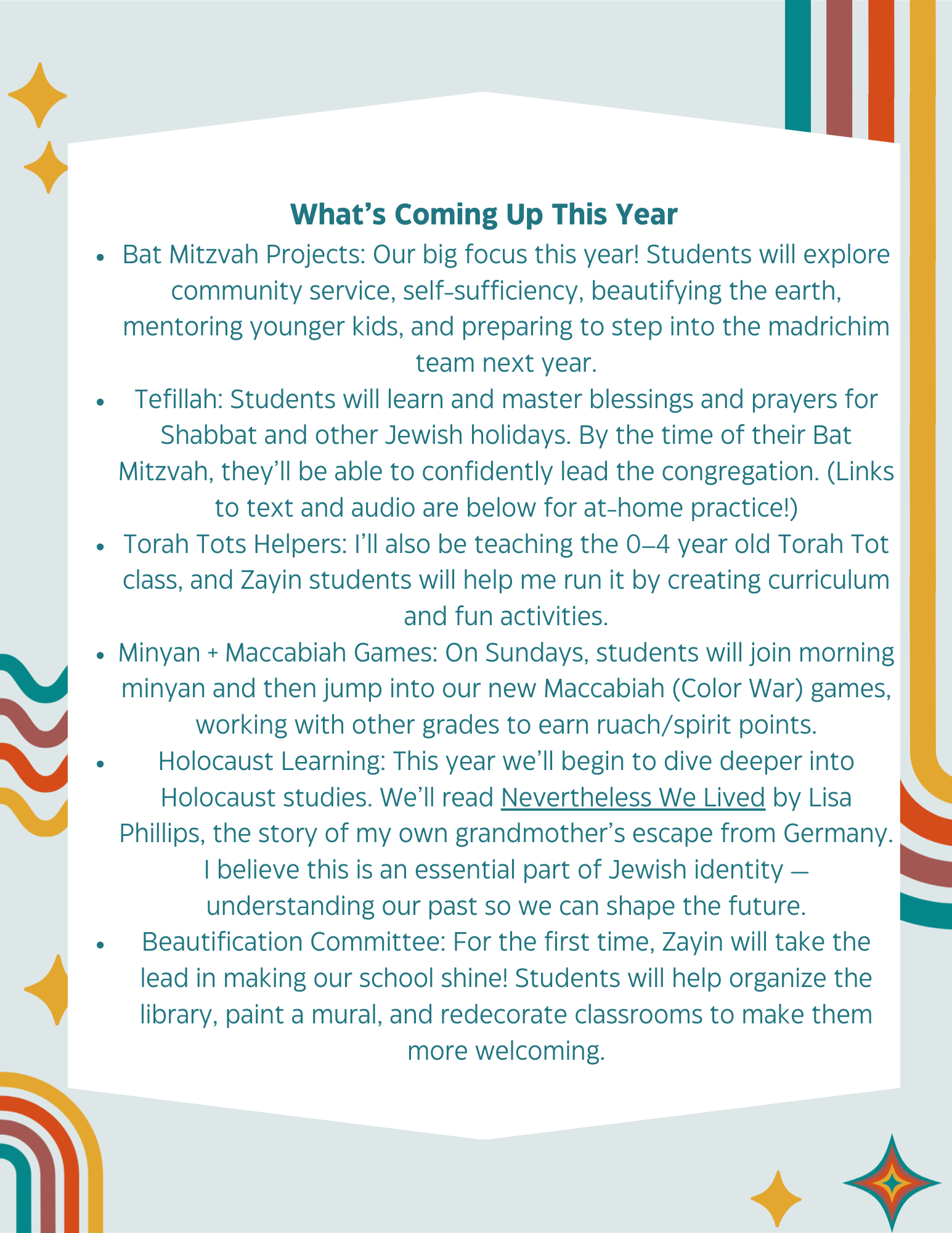
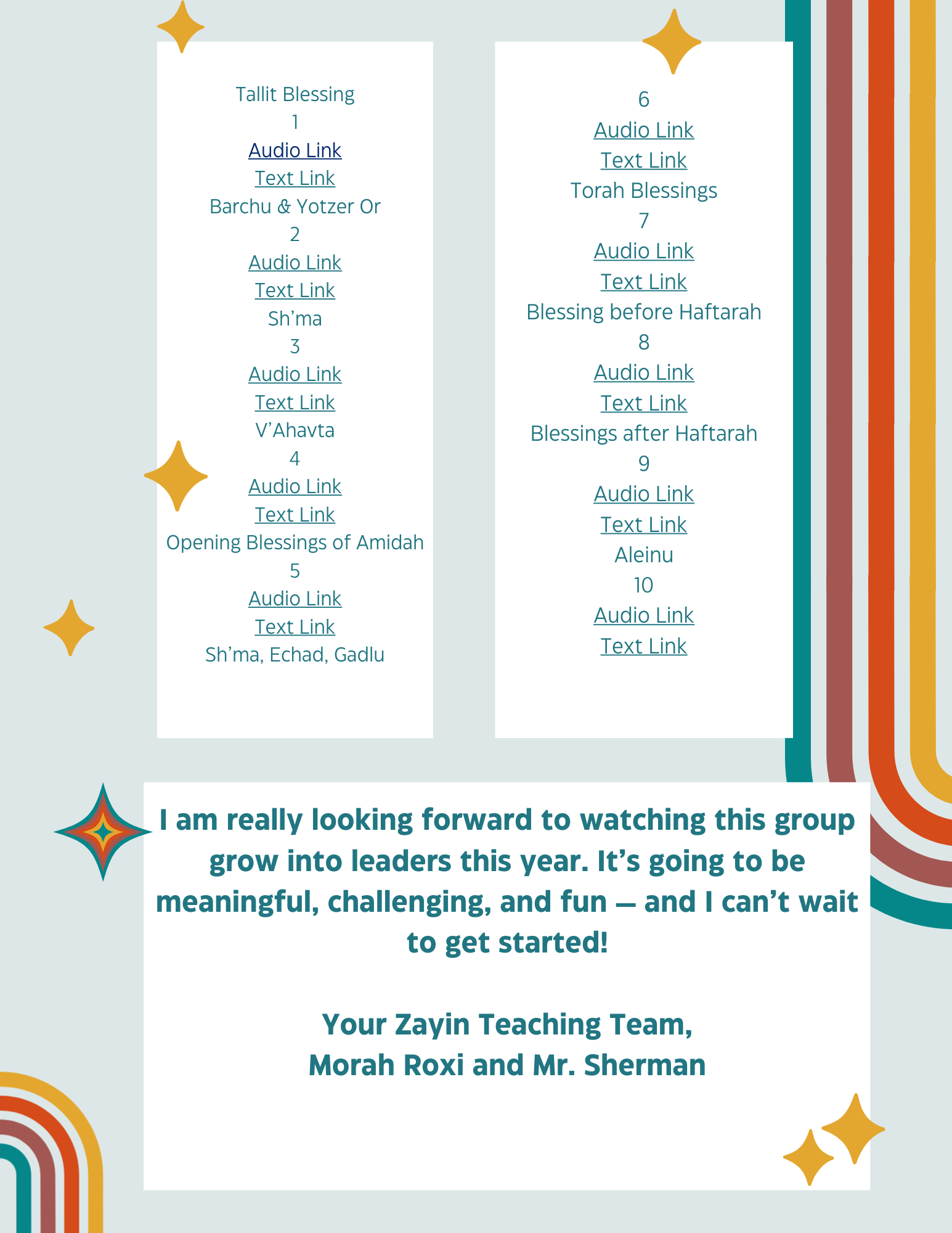
Today we learned about the Five Books of Moses, the Prophets, and how these texts connect to the Haftarah portions. We explained the tri‑annual Torah cycle used in the Conservative movement. We then discussed what the Haftarah is, what the word means (and that it is not from the Torah), and how it relates to Shabbat and the weekly Torah portion.
We also spoke about the funeral of Ran Gvili, of blessed memory, the last hostage to return home to Israel. The students asked thoughtful and important questions. We reviewed how the events of October 7 began, what happened that day, and the story of the Bibas family, including how two very young children were taken captive. We looked at pictures of who they were and discussed what happened to them.
1–28–26
10 Sh’vat 5786
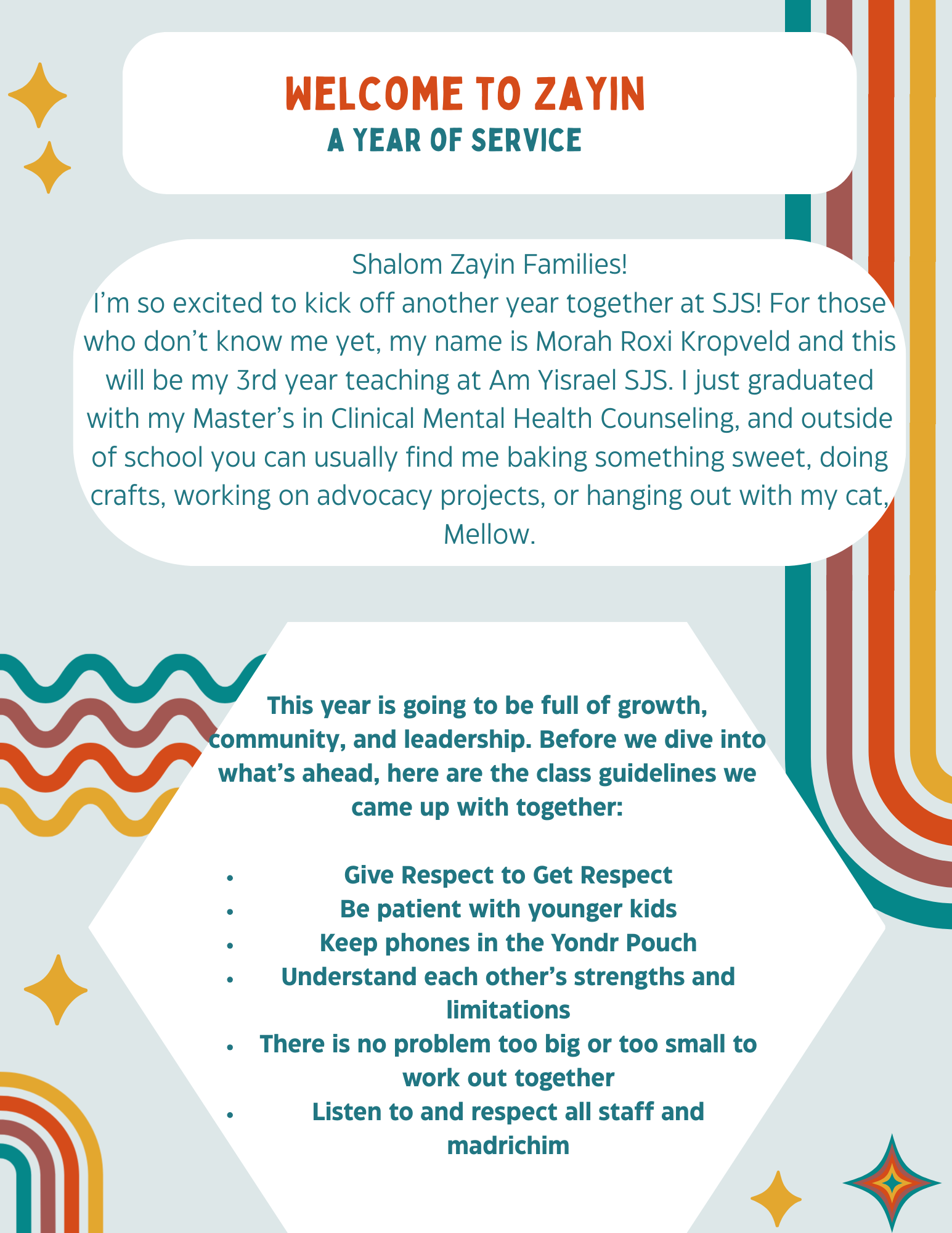
My name is Mr. Dennis Gelbart, and I will be teaching Kitah Zayin on Wednesdays and Sundays for the remainder of the school year. I have been a teacher at Am Yisrael SJS for nearly a decade and have taught most of our students and madrichim.
Today we had an engaging discussion about the concept of Shabbat: what is considered work, how these ideas developed, and how they relate to our lives today. We also explored the rhythm of six days of work followed by one day of rest.
In addition, I introduced the holiday of Tu Bishvat, which arrives on the Hebrew calendar in five days
Teacher: Morah Roxi Kropveld rkropveld@amyisrael.org
December 5, 2025; 15 Kislev 5786
November 21,2025; 1 Kislev 5786
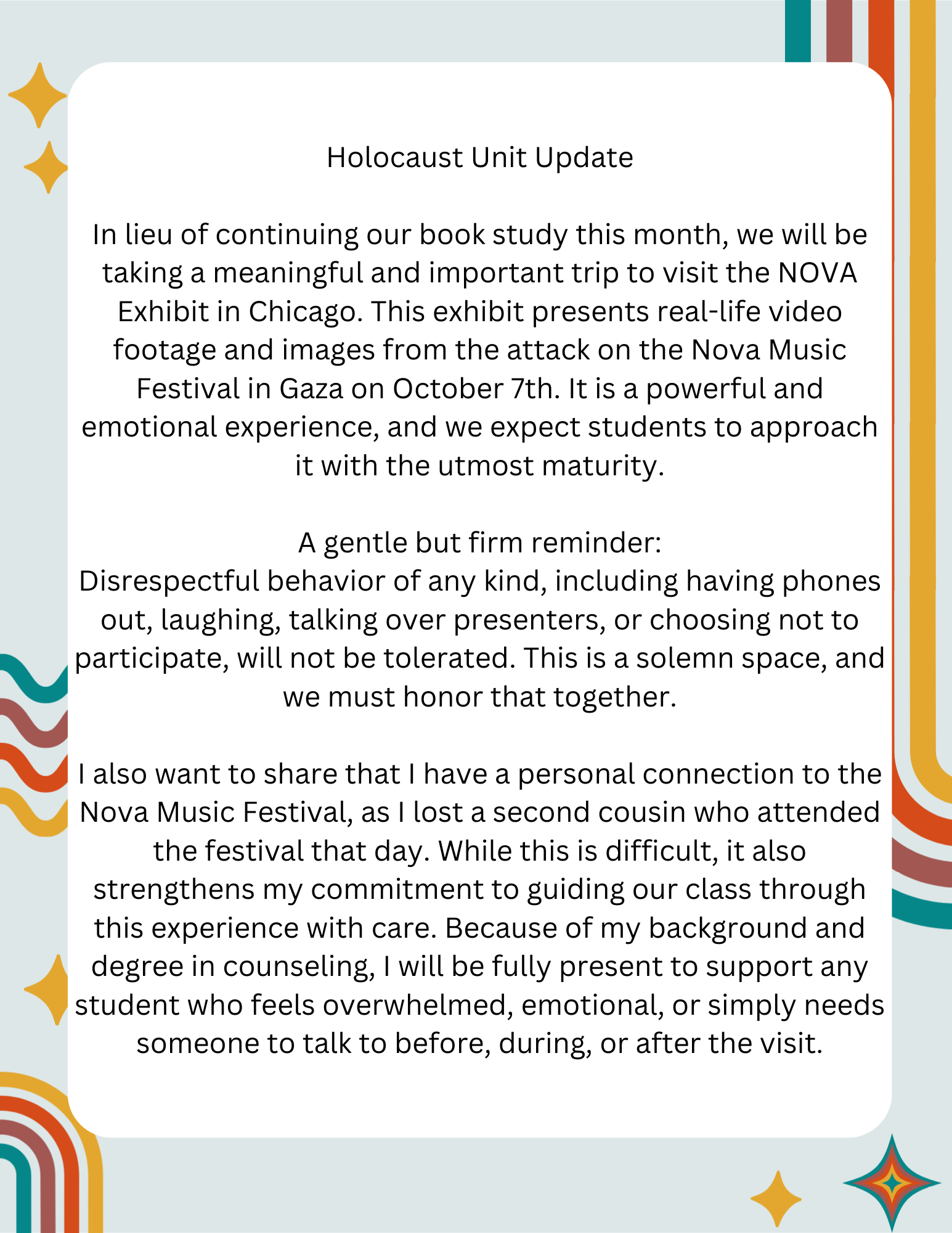
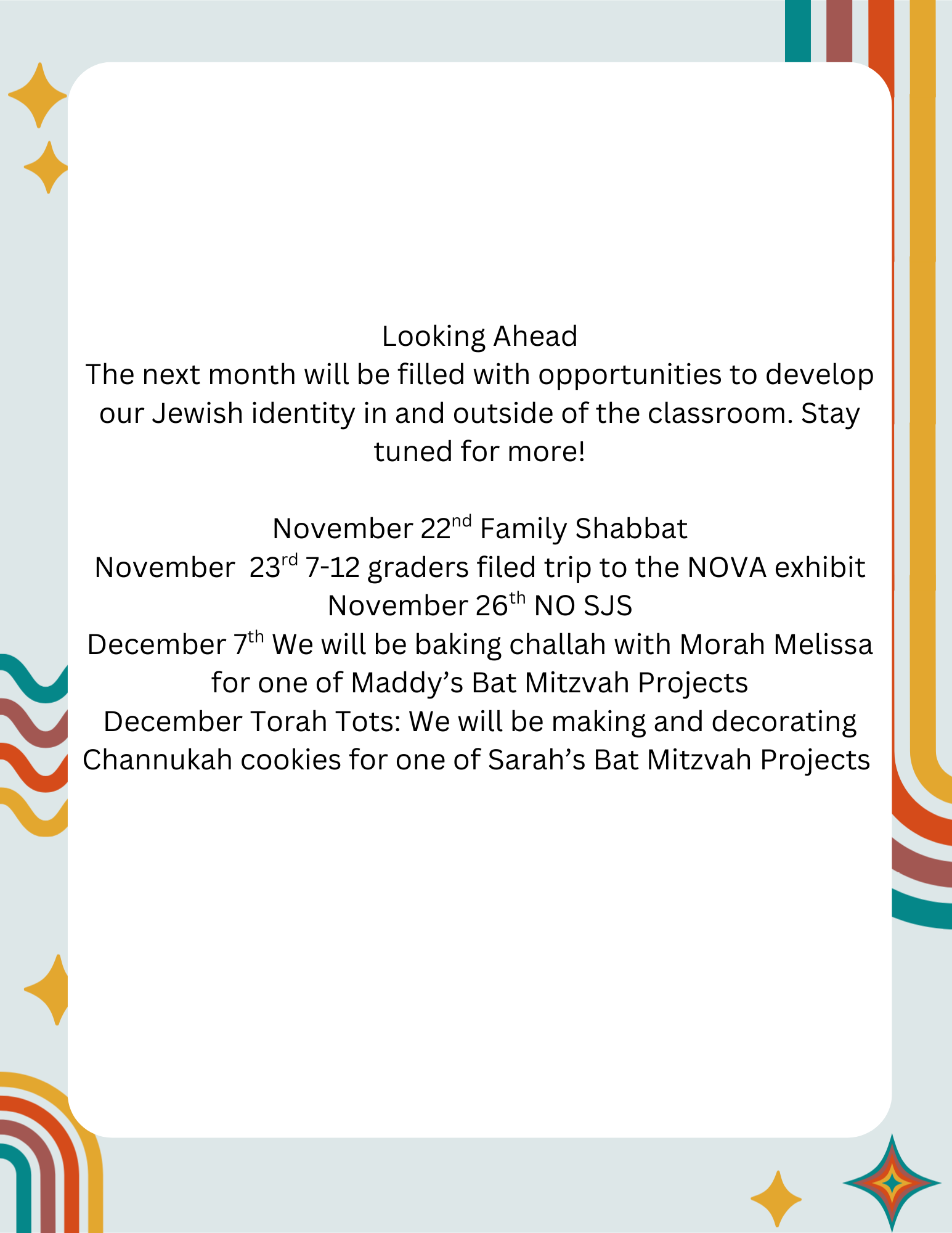
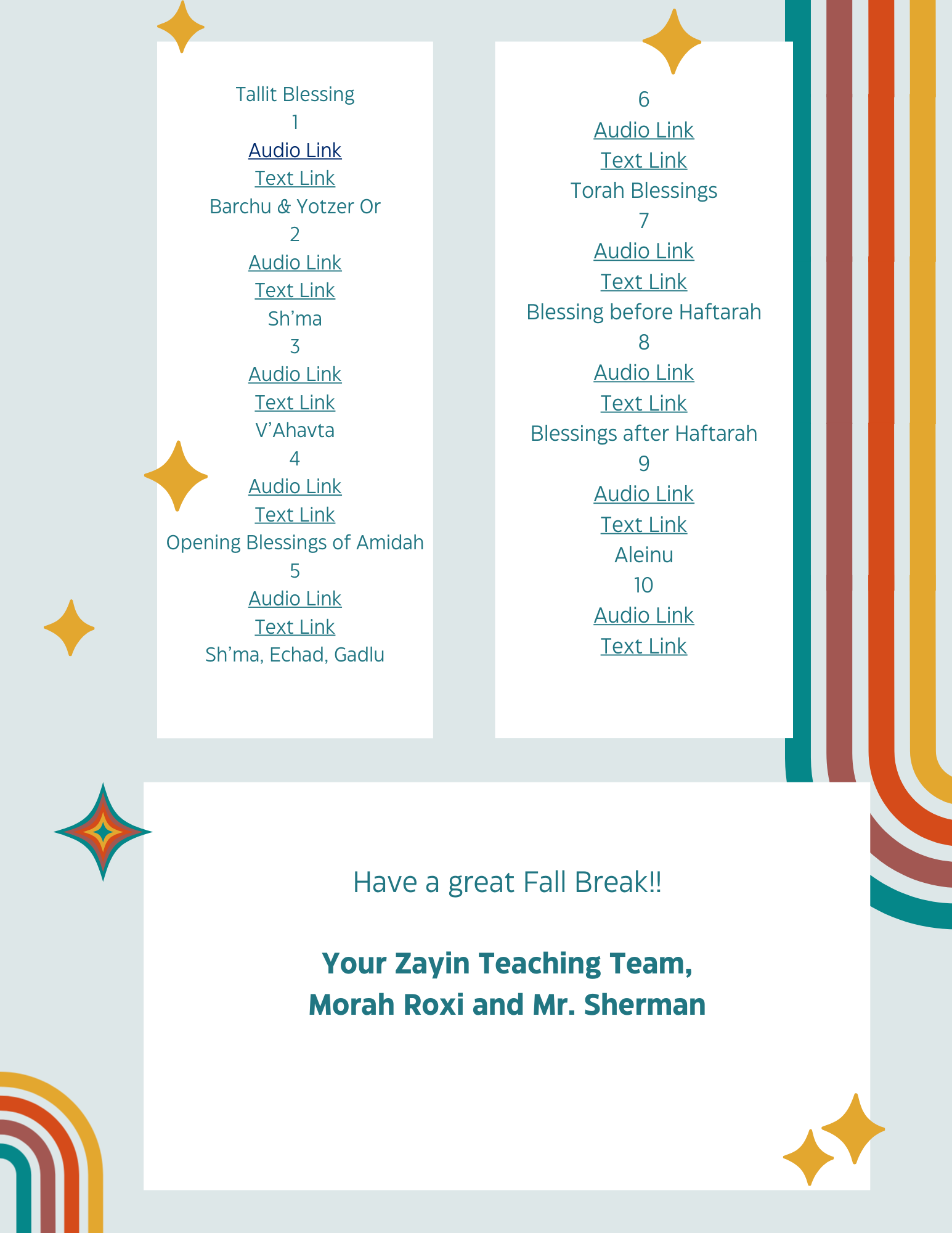
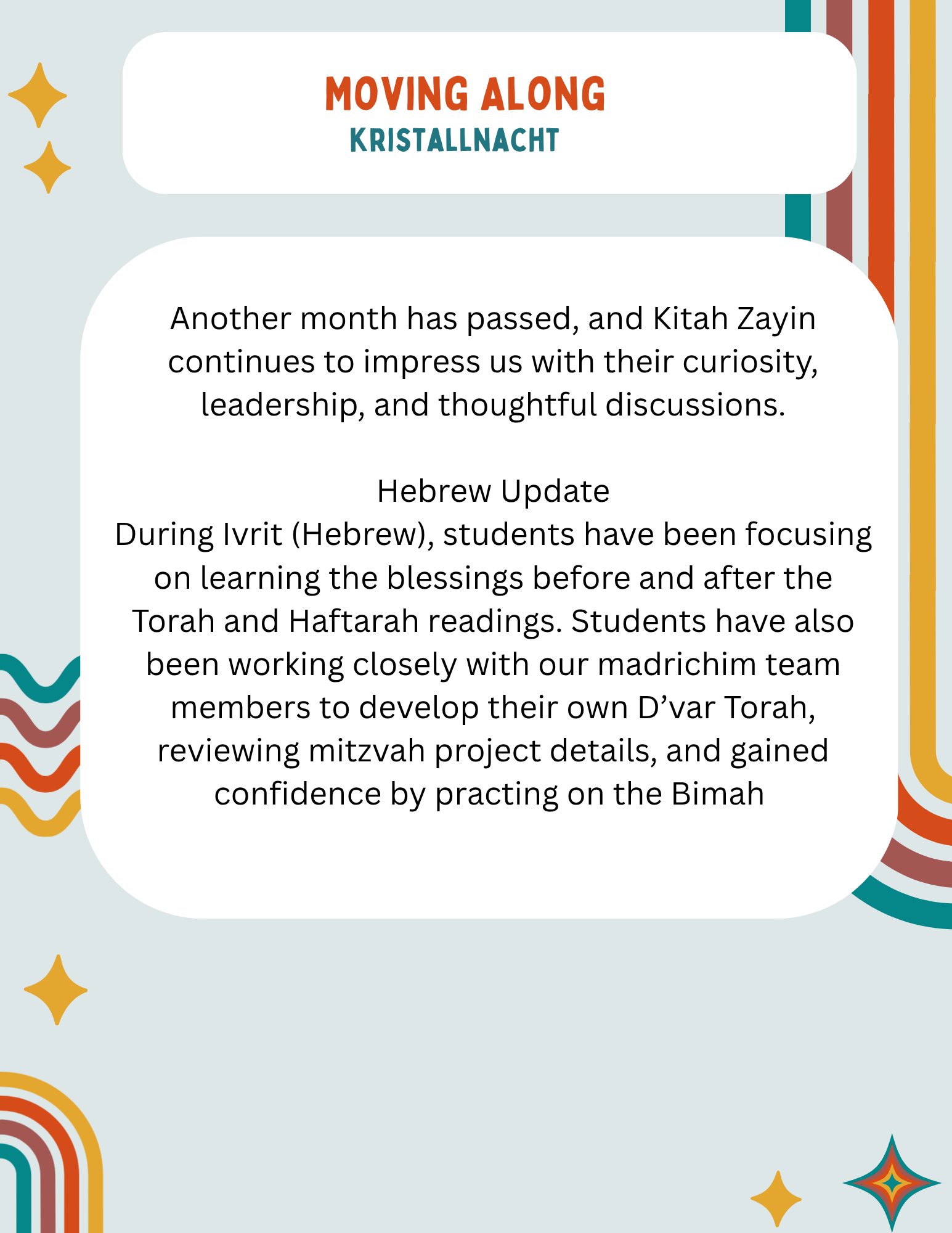
November 6, 2025; 15 Cheshvan 5786
October 23, 2025; 1 Cheshvan 5786
October 10, 2025; 18 Tishrei 5786
September 30, 2025; 8 Tishrei 5786
September 12, 2025; 19 Elul 5785